
已发布
2026年11月27日
分享
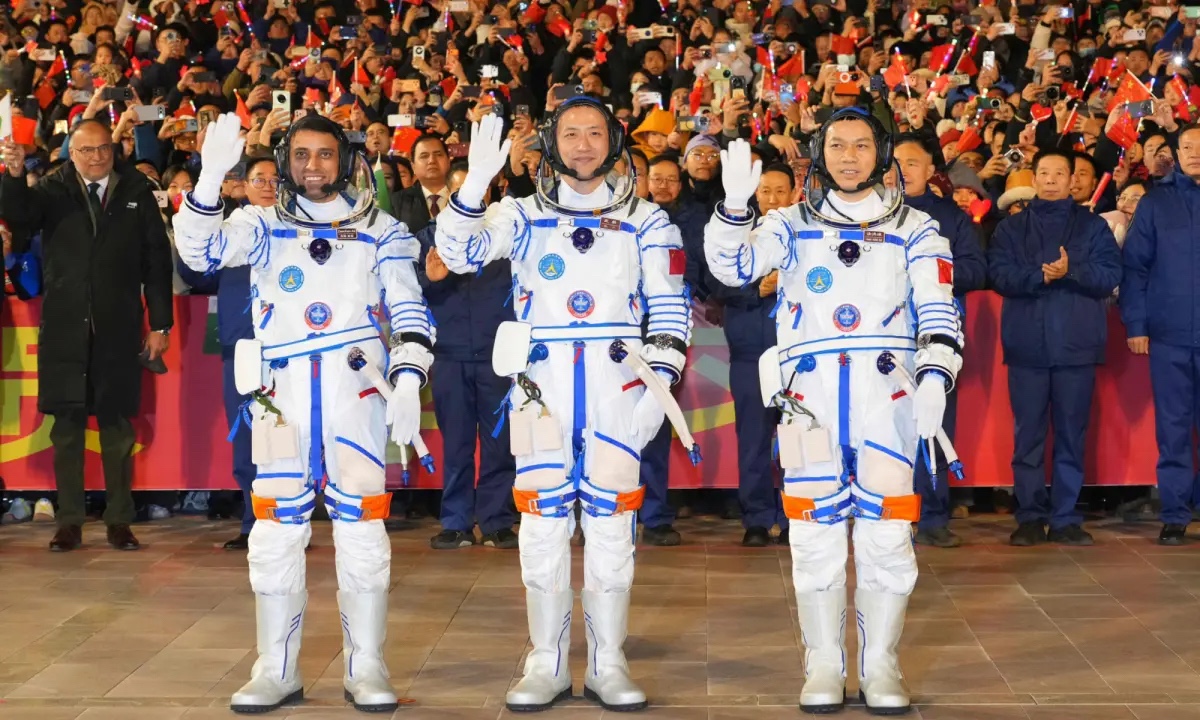
Pakistani astronaut Muhammad Zishan Ali waves at the send-off ceremony for the Shenzhou-24 mission. On November 25, 2026, he boarded the Shenzhou-24 spacecraft and entered China’s Tiangong Space Station, becoming the first foreign astronaut to visit the Chinese space station.
From a Spaceflight to New Heights in China–Pakistan Innovation Cooperation
Xie Yunlong
Founder, Executive Chairman, and Secretary-General of the World Innovation Congress (WIC)
On November 25, 2026, Pakistani astronaut Muhammad Zeeshan Ali entered China’s Tiangong space station aboard the Shenzhou-24 spacecraft. He became the first foreign astronaut to enter China’s space station and the first Pakistani to reach Earth orbit. This historic moment not only marked a new milestone in China–Pakistan space cooperation, but also offered an important lens through which to examine the evolving nature of international scientific and technological collaboration.
Pakistan’s Prime Minister Shehbaz Sharif remarked that this was more than a journey into space by an astronaut; it also carried the dreams of the Pakistani people, its younger generations, and its scientific community. His remarks capture the broader social significance of major scientific and technological achievements beyond the completion of an individual mission. Such achievements can inspire a nation’s vision of the future while opening new possibilities for talent development and innovation.
The year 2026 marks the 75th anniversary of the establishment of diplomatic relations between China and Pakistan. Ali’s journey into space is both a product of the two countries’ longstanding friendship and an important indication that their scientific and technological cooperation is expanding from traditional fields into frontier science. More importantly, this cooperation reflects not merely the sharing of technology and the coordination of missions, but a broader effort to foster the mutual development of innovation capabilities through scientific participation, talent cultivation, and sustained collaboration.
From this perspective, the value of a spaceflight lies not only in the heights it reaches, but also in the conditions it creates for future innovation cooperation.
A Historic Breakthrough and a New Dimension of China–Pakistan Scientific Cooperation
Human spaceflight is an extraordinarily complex systems undertaking. It requires not only launch vehicles, space facilities, and advanced equipment, but also extensive training, mission organization, scientific experimentation, risk management, and precise coordination across multiple systems. An astronaut’s participation in a human spaceflight mission signifies that cooperation has reached the intersection of technological, talent, and scientific research systems.
Over the years, China–Pakistan cooperation has encompassed infrastructure, energy, agriculture, information technology, and satellite applications, among other fields. Pakistan’s astronaut entering China’s space station marks a further expansion of bilateral cooperation into human spaceflight and space science, representing a higher level of scientific and technological collaboration.
This development is not an isolated event, but the outcome of sustained cooperation and accumulated experience. The significance of human spaceflight cooperation should not be measured solely by the completion of a single mission. The training experience, scientific collaboration networks, mission organization capabilities, and professional talent it generates may all become valuable assets for future cooperation.
The true depth of scientific and technological cooperation is often measured not by the number of projects jointly completed, but by whether it can gradually establish a foundation of mutual understanding, meaningful participation, and sustained collaboration.
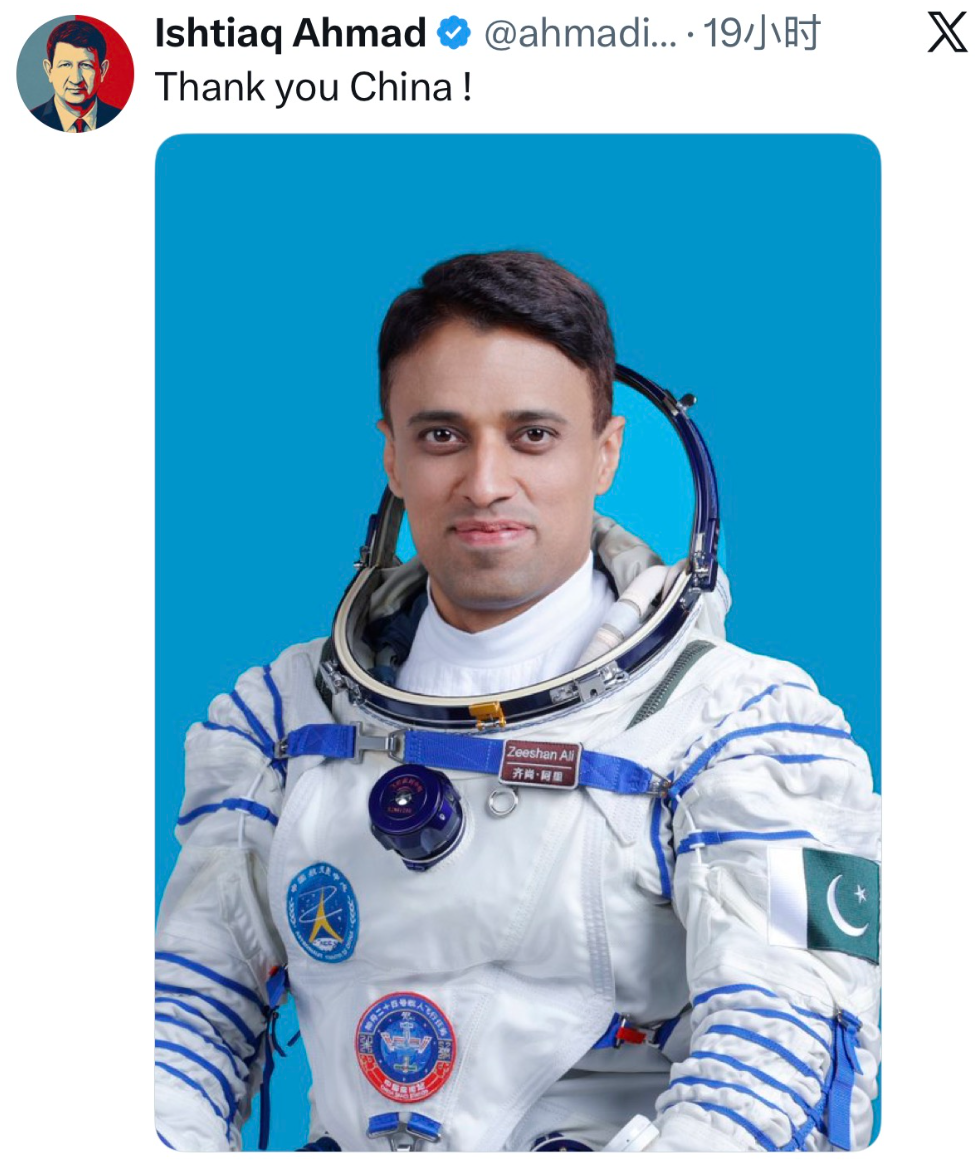
On November 24, Muhammad Zishan Ali made his debut at the press meeting for the astronauts of the Shenzhou-24 manned space mission. Facing the cameras, he expressed his excitement in fluent Chinese: "This 'first' of mine represents not only myself but also my country. I am deeply grateful to the Chinese government for helping us realize our dream of spaceflight."
From Technology Sharing to Joint Innovation Capacity Building
International scientific and technological cooperation has traditionally taken different forms. One model focuses primarily on the transfer of technology, equipment, or research outcomes, enabling partners to advance their development by acquiring and applying existing technologies. Another model goes further by involving partners in formulating research questions, designing experiments, implementing projects, and applying results—thereby extending cooperation from technology acquisition to capability development.
China–Pakistan space cooperation demonstrates important features of this second model.
According to public reports, Pakistan conducted a nationwide call for proposals for space science experiments, receiving 300 proposals. Following expert evaluation, four experiments were selected for research aboard China’s space station, covering fields including life sciences and materials science.
This detail is particularly significant. It indicates that Pakistani researchers were not simply passive recipients of a predetermined mission. By proposing scientific questions, participating in project selection, and preparing experiments, they became involved in the practical process of space science research. The resulting chain of cooperation encompasses the identification of research needs, project organization, expert evaluation, experimental design, implementation in orbit, and subsequent data analysis and knowledge accumulation.
This shift in the cooperation model means that developing countries gain not only access to platforms for frontier research, but also the opportunity to gradually build their own research organization and engineering capabilities through substantive participation. This is what distinguishes joint capacity building from one-way technical assistance.
Of course, participation in a single space mission does not mean that a partner country has already acquired a fully autonomous human spaceflight capability. Capacity building is a long-term process requiring sustained investment in research, talent development, institutional collaboration, and industrial application. Yet participation in high-level international research missions enables partners to accumulate practical experience, cultivate talent, and lay the foundations for future independent research and deeper cooperation.
From the perspective of innovation and development, technology can be acquired through transfer, and equipment can be procured. What holds enduring value, however, is an innovation system capable of continuously identifying questions, organizing research, solving problems, and translating results into developmental capacity.
China–Pakistan Cooperation and the Emerging Agenda of Global Innovation Governance
The significance of China–Pakistan space cooperation can also be understood in the context of the changing global innovation landscape.
Today, scientific and technological innovation is profoundly reshaping global economic structures, industrial competition, and national development trajectories. Frontier fields such as artificial intelligence, advanced materials, biotechnology, and space science require not only substantial investment and highly skilled talent, but also increasingly depend on transnational scientific collaboration and complex innovation networks.
Yet global access to scientific resources, research platforms, and innovation capabilities remains highly uneven. How can more countries not only share the benefits of innovation, but also participate in the processes through which innovation is created? This has become an important question for global innovation governance.
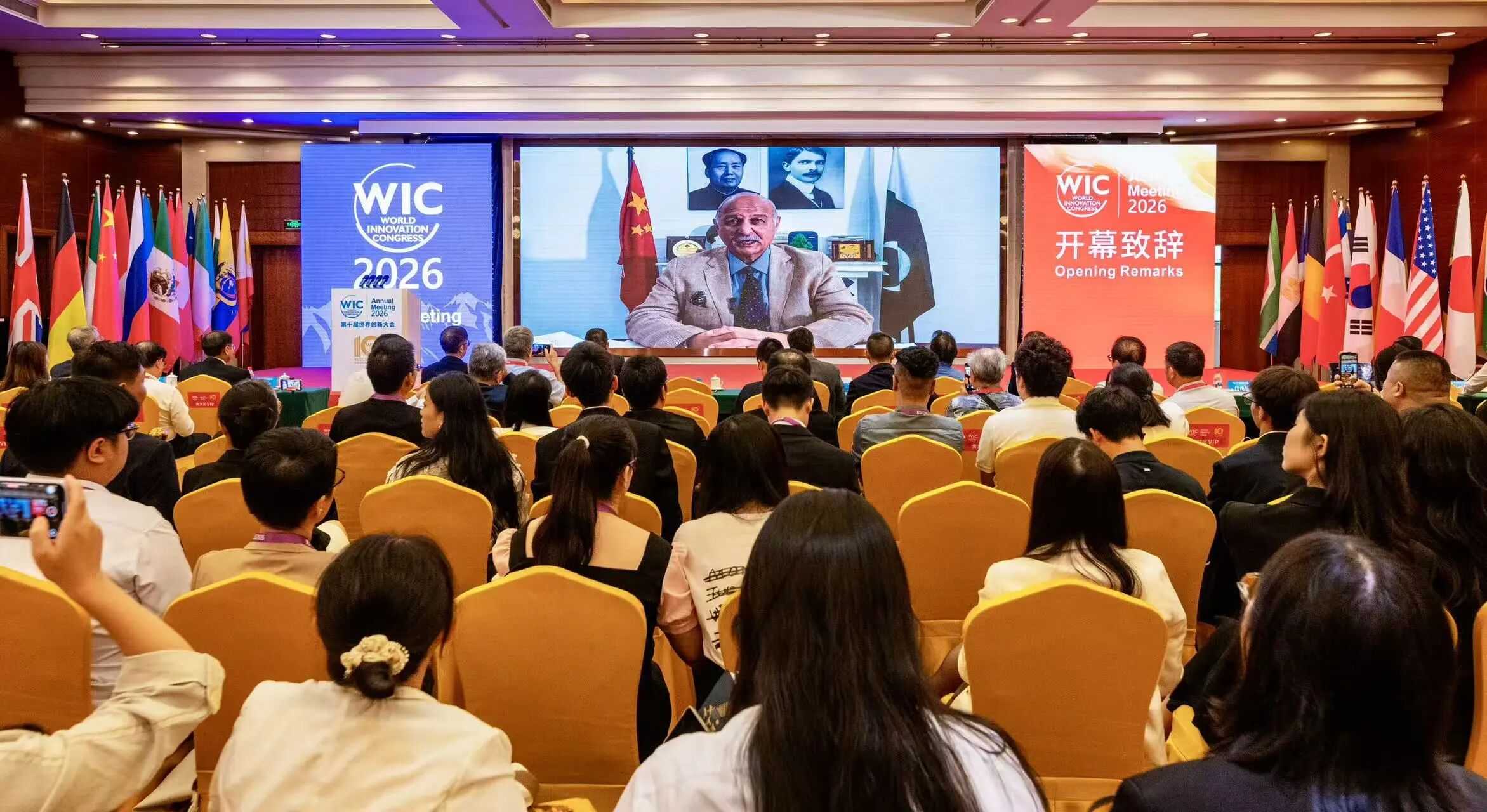
The photo shows Mushahid Hussain Sayed, Pakistani Senator and Chairman of the Pakistan China Institute, delivering a video address at the Guangzhou Summit of the 10th World Innovation Conference (WIC2026 Annual Conference).
On November 1, 2026, Senator Mushahid Hussain Sayed of Pakistan, Founding Chairman of the Pakistan-China Institute, delivered an opening address at the Guangzhou Summit of the World Innovation Congress (WIC2026 Annual Conference). He noted that China was willing to share its knowledge, experience, and expertise with friendly countries and the Global South. He also emphasized Pakistan’s well-trained professional talent and dynamic younger generation, highlighting the potential for deeper China–Pakistan cooperation in science, innovation, technology, artificial intelligence, education, agriculture, and industry.
His remarks offer an important international perspective on the significance of this space cooperation. International innovation cooperation should not be limited to the provision of technology or research outcomes by advanced countries to others. It should create conditions that enable countries, according to their own development needs and talent strengths, to participate in scientific research, contribute knowledge, and progressively enhance their innovation capabilities.
This is an essential direction for the continued evolution of global innovation governance: how to promote the more effective flow of innovation resources while respecting different stages of development and national circumstances, and how to establish cooperation mechanisms that are more open, inclusive, and sustainable.
For countries of the Global South, participation in frontier science does not require replicating the development paths of other countries. Rather, international cooperation can help them gradually build research capabilities, talent systems, and innovation ecosystems suited to their own circumstances. The research participation mechanism demonstrated by China–Pakistan space cooperation offers a valuable practical example of this approach.
From Space Exploration to New Opportunities for Shared Development
The value of space technology extends far beyond the exploration of the universe. Satellite remote sensing, space observation, and related technologies are already widely applied in agriculture, water resource management, climate research, disaster warning, environmental protection, and communications.
For a developing country such as Pakistan, there is considerable scope to connect space technology with practical development needs. Through deeper cooperation in space science, China and Pakistan can further explore how scientific research can be translated into technological solutions that serve socioeconomic development, strengthening the links between space technology and agriculture, the environment, energy, and public services.
This also reminds us that the value of frontier technology cooperation should not be assessed solely by the scientific sophistication of research activities. We must also consider whether it addresses real development challenges, creates sustainable applications, and enables the benefits of technological progress to reach broader segments of society.
From scientific experiments to technological applications, and from talent development to industrial collaboration, innovation cooperation needs to establish a continuous chain linking basic research, engineering practice, and social development. Only when frontier science and practical needs reinforce one another can scientific and technological cooperation become a lasting driver of development.
From a Historic Mission to a Long-Term Innovation Community
The full significance of major scientific and technological cooperation often becomes apparent only after a mission has been completed.
A human spaceflight mission can generate valuable research experience and establish a foundation for collaboration. Yet translating these achievements into sustained innovation capacity requires long-term joint research, talent exchanges, institutional partnerships, and technological applications. More importantly, the partners must continue to expand into new areas of research, ensuring that the trust and collaborative mechanisms established through one mission can support the next, more ambitious innovation endeavor.
China–Pakistan space cooperation therefore carries significance beyond a single mission. It provides a foundation for deeper bilateral collaboration in space science and related technologies, while also offering new insights into how countries of the Global South can participate in international frontier research. International cooperation can move from sharing results to conducting research together, and from completing joint missions to building capabilities together.
The World Innovation Congress (WIC) has long been committed to providing a platform that connects innovation communities across countries and disciplines. Enabling more countries to move progressively from recipients of innovation outcomes to participants and contributors in the innovation process is an important direction for global innovation cooperation to pursue.
The true value of a historic scientific and technological partnership should be measured not only by what it has achieved, but also by whether it creates the conditions for the next collaboration, lowers the barriers to future cooperation, and makes joint innovation a sustainable capability.
From this perspective, the value of China–Pakistan space cooperation lies not only in reaching new heights together in space, but also in opening new possibilities for future scientific collaboration, talent development, and innovation capacity building. Turning one breakthrough into the starting point for the next, and enabling more countries to participate in and contribute to humanity’s shared scientific and technological progress, is the enduring value that global innovation cooperation should strive to achieve.

Pictured: Author Xie Yunlong.
文章来源:世界创新大会秘书处,版权属于原作者,转载请注明文章作者及来源。


点击右上角分享按钮