

已发布
2026年06月24日
分享

加州圣克拉拉英伟达总部园区,无数服务器机柜日夜不间断高速运转,数万片GPU持续承载全球各地大模型训练任务;实验室里研发团队反复调试新一代芯片架构,程序员依托CUDA工具链完成海量AI算法适配。回溯三十余年前,圣何塞一家Denny's平价餐厅内,黄仁勋与两名工程师仅凭着四万美元贷款,定下研发图形芯片的创业初心。从餐厅里微小的创业构想,到如今支撑全球人工智能运转的算力底座,英伟达三十余年的成长之路,是一场贯穿底层技术、长期战略与生态建设的完整蜕变。
人工智能产业的爆发,并非单纯算法迭代驱动,其底层依托于算力硬件的持续突破与计算体系的持续重构。在全球智能产业格局重塑进程中,英伟达完成了一次极具代表性的企业跃迁:从一家深耕消费级图形芯片的科技厂商,稳步成长为支撑全球人工智能发展的核心算力基座。三十余年发展道路上,英伟达数次跨越产业周期、突破行业边界,凭借持续的技术坚守与关键节点的战略抉择,改写了现代计算产业的发展格局。
绝境突围:图形赛道夯实企业发展底盘
1993年,黄仁勋在美国加州圣何塞创立英伟达,以图形渲染芯片为切入点,切入高速增长的消费电子与游戏市场。初创阶段企业并无成熟技术积累与市场基础,早期产品NV1因架构设计独特、图形接口不兼容行业主流标准,落地困难、销量低迷。此后英伟达承接日本世嘉主机芯片研发项目,却因坚持自有技术路线再度遭遇研发停滞,项目失败、合作受阻,企业资金链濒临断裂,一度站在破产边缘。
危机之下,英伟达完成了关键的自我校正。黄仁勋以坦诚务实的沟通争取到合作方谅解,稳住企业生存基本盘,随即彻底放弃封闭、非主流的技术路线,全面对接行业通用标准。1997年,英伟达推出Riva 128图形芯片,全面兼容微软Direct3D,凭借稳定性能与良好适配性迅速打开市场,上市四个月销量突破百万片,成功扭转经营颓势,让企业彻底走出生存困境。
1999年,英伟达推出GeForce 256,首次独立定义图形处理器GPU,开启独立显卡的产业时代。此后近十年,英伟达持续迭代图形架构、优化渲染性能,稳稳占据全球消费级显卡主流市场,形成稳定、充沛的经营性现金流。游戏图形业务带来的持续营收与技术积累,为企业后续跨赛道布局、长期高风险技术研发,提供了扎实的产业底盘与战略缓冲空间。
战略定力:CUDA架构重塑GPU产业边界
英伟达真正实现与同行拉开代际差距、完成企业属性质变的关键,是2006年CUDA通用并行计算架构的推出。在当时的产业认知中,GPU始终是服务游戏场景的专用图形硬件,行业普遍聚焦画质提升、迭代速度与功耗优化,并未意识到通用计算的未来价值。
英伟达率先跳出行业固有认知,通过CUDA架构赋予GPU通用并行计算能力,让原本只能处理图形渲染任务的芯片,具备大规模、高并行数据运算能力。这一战略突破引发行业与资本市场广泛质疑,新增架构大幅推高研发生产成本,短期难以落地盈利,公司市值一度缩水至15 亿美元,承受空前市场压力。
面对短期舆论与资本波动,英伟达始终坚持长期技术路线,推行“CUDA Everywhere”开放策略,主动向高校、科研机构、开发者群体开放技术体系。依托兼容C语言的轻量化开发环境,大幅降低并行计算开发门槛,吸引全球科研力量参与技术迭代。2011至2012年,英伟达持续深耕深度学习技术生态,联合领域顶尖学者迭代算法工具,推出cuDNN加速库,为深度学习模型训练提供坚实底层支撑。
2012年,依托英伟达GPU训练的AlexNet模型在ImageNet图像识别竞赛中大幅刷新精度纪录,让深度学习的工业化潜力首次被全球产业界看见。这一次技术突破,也正式验证了CUDA通用计算路线的正确性。不同于常规产品升级,CUDA的真正价值,是搭建起一套“硬件迭代—软件开发—场景落地—生态集聚”的正向循环体系,让英伟达从单一硬件厂商,逐步成长为具备平台属性的技术生态企业。
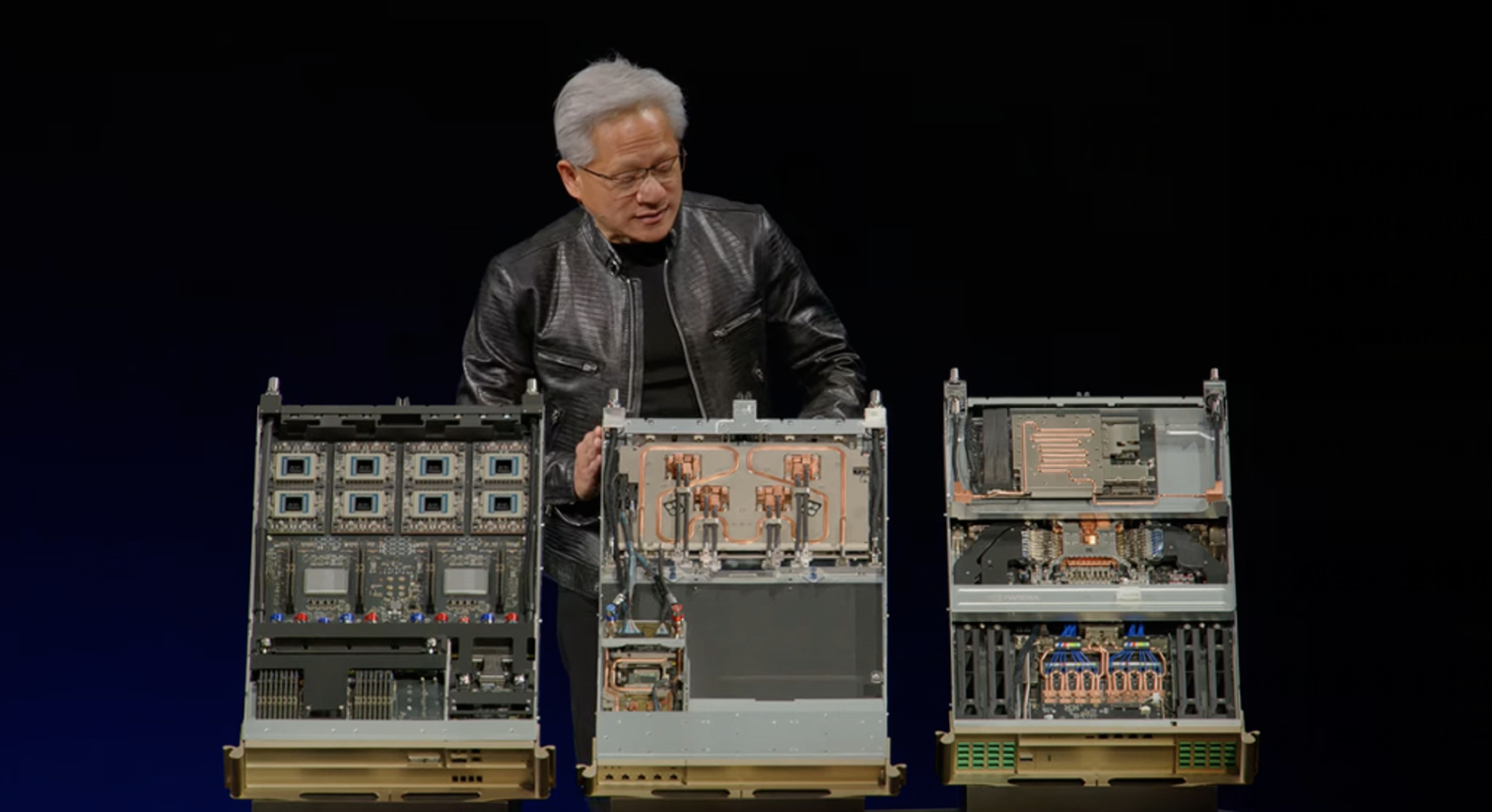
图为:英伟达 GTC 开发者大会上,黄仁勋展示三代 DGX 系列 AI 超级计算机内部硬件架构。
生态成型:全栈布局构筑AI算力核心基座
历经十余年生态沉淀,英伟达在人工智能产业爆发之际,完成了从硬件产品输出到算力基础设施输出的深度转型。随着大模型、大数据、深度神经网络快速发展,全球算力需求迎来指数级增长,英伟达长期布局的通用计算生态全面释放价值。
2016年,英伟达推出首款AI超级计算机DGX-1,针对性适配大规模模型训练需求,构建一体化算力集群,早期即服务于OpenAI等前沿机构,深度参与生成式人工智能技术的早期培育。2019年,英伟达收购网络通信企业Mellanox,补齐高速互联、数据传输、集群协同关键环节,打通芯片、网络、系统、软件全链条,形成完整的数据中心算力体系。
生成式AI浪潮到来后,全球高端训练算力供需失衡,英伟达凭借成熟生态稳居市场主导地位。2025财年,企业总营收达1305亿美元,同比增长114%,净利润729亿美元;其中数据中心算力业务营收1152亿美元,占总营收比重超八成,成为绝对核心增长引擎。2026财年营收进一步攀升至2159亿美元,在高端AI训练芯片市场保持九成以上市场份额,牢牢主导全球算力供给格局。
英伟达的市场优势,并非单纯依靠硬件性能领先,而是依托独特的全栈协同模式,实现芯片架构、软件体系、集群系统、开发工具的一体化设计,实现跨代际性能跃升。长期积累的开发者生态、工具链体系与模型适配能力,形成极强的用户黏性与路径依赖,构筑起同行难以追赶的综合壁垒。也正因如此,英伟达始终强调:企业的核心定位,是人工智能时代的基础设施提供者。
辩证审视:高位增长背后的挑战与变量
稳居全球算力产业顶端的英伟达,同样面临复杂多变的外部环境与行业竞争压力,其发展路径并非无懈可击。
在地缘科技博弈加剧的背景下,全球芯片产业规则、贸易体系与市场格局持续调整,对英伟达全球化布局形成显著约束。行业竞争持续加剧,AMD不断拉近通用算力性能差距,谷歌、亚马逊等科技企业持续完善自研芯片体系,新兴算力企业持续冲击细分赛道,市场竞争由单点性能比拼走向体系化对抗。同时,人工智能产业由大规模训练逐步走向训练与推理并重,场景需求趋于细分、多元,算力产品的迭代逻辑持续变化,也对传统通用算力模式提出新的考验。
但英伟达的核心壁垒依然稳固。相较于可快速追赶、快速迭代的硬件参数,近二十年积累的软件生态、开发体系、工程化经验与开发者网络,具备极强的时间沉淀优势与不可替代性。依托成熟算力底座,英伟达持续拓展产业边界,布局数字劳动力、智能物理系统等新兴赛道,持续打开长期增长空间。
 图为:英伟达 Voyager 总部园区航拍全景。
发展启示:长期创新构筑企业时代优势
纵观英伟达三十余年发展历程,其跨越式成长,不是短期风口红利的结果,而是一次次关键战略选择、持续技术坚守与长期生态建设叠加形成的必然结果。
从游戏图形芯片站稳市场,到CUDA架构重构计算边界,再到全面支撑全球AI算力体系,英伟达走出了一条“夯实主业—突破边界—构建生态—定义产业”的硬核创新路径。其发展经验表明,顶尖科技企业的长久竞争力,从来不来自短期市场热度,而来自对底层技术趋势的准确判断、对长期创新的持续投入、对产业生态的耐心培育。
在新质生产力加速发展、智能科技深度变革的时代背景下,英伟达的成长之路为硬核科技企业提供了清晰启示:真正的产业领先,源于在无人区坚守长期主义,在技术底层构筑核心能力,在产业变革前夜提前布局、持续沉淀,最终在时代机遇来临时形成不可替代的系统优势。
作者:谢云龙,世界创新大会(WIC)创始人、秘书长,全球创新战略资深研究学者。本文节选自世界创新大会创立十周年系列丛书——《创新逻辑:全球创新治理与中国方案》——世界创新大会十年理论与实践(即将出版)。
At NVIDIA's headquarters campus in Santa Clara, California, countless server racks run at full speed day and night, with tens of thousands of GPUs continuously powering large-scale model training tasks around the world. In the laboratories, R&D teams repeatedly debug next-generation chip architectures, while programmers rely on the CUDA toolchain to complete massive AI algorithm adaptations. Tracing back over thirty years, inside a Denny's restaurant in San Jose, Jensen Huang and two engineers, with only $40,000 in loans, set their entrepreneurial vision on developing graphics chips. From that modest idea in a diner to today's computing foundation that underpins global artificial intelligence, NVIDIA's journey of over three decades represents a complete transformation encompassing foundational technology, long-term strategy, and ecosystem development.
The rise of the AI industry is not driven solely by algorithmic iteration; at its core, it depends on sustained breakthroughs in computing hardware and the ongoing reconfiguration of computing systems. In the reshaping of the global intelligent industry landscape, NVIDIA has completed a highly representative corporate leap: evolving from a technology company deeply rooted in consumer graphics chips to the essential computing infrastructure supporting global AI development. Over more than thirty years, NVIDIA has repeatedly transcended industry cycles and broken through sector boundaries, rewriting the trajectory of modern computing through persistent technological commitment and strategic decisions at pivotal moments.
Breakthrough from Adversity: The Graphics Track Solidifies the Company's Foundation
In 1993, Jensen Huang founded NVIDIA in San Jose, California, entering the rapidly growing consumer electronics and gaming market through graphics rendering chips. In its early stages, the company lacked mature technology and market presence. Its first product, the NV1, struggled due to its unique architecture and incompatibility with mainstream graphics APIs, resulting in poor sales. Subsequently, NVIDIA took on a project to develop a chip for Sega's console, but its insistence on proprietary technology led to another R&D setback. The project failed, partnerships were strained, and the company's cash flow was nearly severed, bringing it to the brink of bankruptcy.
In the midst of crisis, NVIDIA executed a crucial self-correction. Jensen Huang secured the understanding of its partners through honest and pragmatic communication, stabilizing the company's survival. He then completely abandoned the closed, non-mainstream technology path and fully embraced industry-standard interfaces. In 1997, NVIDIA launched the Riva 128 graphics chip, which was fully compatible with Microsoft's Direct3D. With stable performance and strong compatibility, it quickly captured the market, selling over one million units within four months of its release. This success reversed the company's fortunes and pulled it out of existential crisis.
In 1999, NVIDIA introduced the GeForce 256, which first defined the GPU (Graphics Processing Unit) as an independent concept, ushering in the era of discrete graphics cards. Over the following decade, NVIDIA continued to iterate its graphics architectures and optimize rendering performance, firmly establishing itself as the dominant player in the global consumer GPU market, generating stable and substantial operating cash flow. The sustained revenue and technological accumulation from its gaming graphics business provided a solid industrial foundation and strategic buffer for subsequent cross-sector investments and long-term, high-risk R&D.
Strategic Resolve: The CUDA Architecture Redefines the Boundaries of the GPU Industry
The pivotal moment that truly widened the gap between NVIDIA and its peers and transformed its corporate identity was the introduction of the CUDA general-purpose parallel computing architecture in 2006. At the time, the industry perception was that GPUs were dedicated graphics hardware for gaming, with the sector primarily focused on image quality, iteration speed, and power efficiency, largely overlooking the future value of general-purpose computing.
NVIDIA was the first to break from this industry consensus, using the CUDA architecture to endow GPUs with general-purpose parallel computing capabilities, enabling chips originally designed solely for graphics rendering to handle large-scale, highly parallel data computations. This strategic breakthrough was met with widespread skepticism in both the capital markets and the industry. The new architecture significantly increased costs, provided limited immediate benefit to end-users, and showed no short-term commercial return. Due to the cost surge and lack of visible profitability from the CUDA investment, the capital market sold off aggressively, driving the company's market value down to $1.5 billion, subjecting it to immense pressure.
Despite short-term volatility in public opinion and the financial markets, NVIDIA remained committed to its long-term technology roadmap, promoting the "CUDA Everywhere" open strategy and actively opening its technology ecosystem to universities, research institutions, and developers. By providing a lightweight development environment compatible with the C language, it significantly lowered the barrier to parallel computing development, attracting a global community of researchers to participate in technology iteration. Between 2011 and 2012, NVIDIA continued to deepen its engagement with the deep learning technology ecosystem, collaborating with leading scholars in the field to refine algorithmic tools and launch the cuDNN acceleration library, providing a solid foundation for deep learning model training.
In 2012, the AlexNet model, trained on NVIDIA GPUs, achieved a dramatic leap in accuracy at the ImageNet image recognition competition, marking the first time the industrial potential of deep learning was recognized by the global tech industry. This breakthrough also validated the correctness of the CUDA general-purpose computing approach. Unlike conventional product upgrades, the true value of CUDA lies in establishing a positive feedback loop: "hardware iteration — software development — scenario implementation — ecosystem agglomeration." This transformed NVIDIA from a single hardware vendor into a platform-based technology ecosystem company.
Ecosystem Maturation: A Full-Stack Approach Builds the Core Foundation for AI Computing
After more than a decade of ecosystem development, NVIDIA made a profound transition from hardware product provider to computing infrastructure provider, coinciding with the explosion of the AI industry. As large-scale models, big data, and deep neural networks advanced rapidly, global demand for computing power experienced exponential growth, and NVIDIA's long-established general-purpose computing ecosystem began to fully realize its value.
In 2016, NVIDIA launched the DGX-1, the first AI supercomputer specifically designed for large-scale model training, creating an integrated computing cluster. Early adopters included OpenAI, and NVIDIA thus participated in the early incubation of generative AI technology. In 2019, NVIDIA acquired Mellanox, a networking communications company, filling critical gaps in high-speed interconnectivity, data transmission, and cluster coordination. This move integrated chips, networking, systems, and software into a complete full-stack data center computing architecture.
With the advent of the generative AI wave, global demand for high-end training computing far outstripped supply. NVIDIA, with its mature ecosystem, firmly maintained market leadership. In fiscal year 2025, the company's total revenue reached $130.5 billion, up 114% year-over-year, with net income of $72.9 billion. Data center revenue alone accounted for $115.2 billion, or over 80% of total revenue, becoming the absolute core growth engine. In fiscal year 2026, revenue further climbed to $215.9 billion. NVIDIA continues to hold over 90% of the high-end AI training chip market, decisively dominating the global compute supply landscape.
NVIDIA's market advantage is not solely based on superior hardware performance; it also relies on its unique full-stack co-design approach, integrating chip architecture, software systems, cluster systems, and development tools to achieve generational performance leaps. The long-established developer ecosystem, toolchains, and model adaptation capabilities create strong user stickiness and path dependency, forming a comprehensive barrier that competitors find difficult to overcome. This is why NVIDIA consistently emphasizes that its core positioning is that of an infrastructure provider for the AI era.
A Balanced Perspective: Challenges and Variables Behind High-Growth
Despite its dominant position atop the global computing industry, NVIDIA faces a complex and volatile external environment and intense competitive pressures. Its path forward is not without vulnerabilities.
Against the backdrop of intensifying geopolitical tech rivalry, the evolving rules of the global chip industry, trade regimes, and market structures impose significant constraints on NVIDIA's global expansion. Competitive dynamics are escalating: AMD continues to narrow the performance gap in general-purpose computing; tech giants like Google and Amazon are advancing their proprietary chip ecosystems; and emerging compute companies are challenging established players in niche segments. Competition is shifting from single-point performance races to systemic confrontations. Simultaneously, the AI industry is transitioning from a focus on large-scale training to an equal emphasis on both training and inference, with more fragmented and diverse application scenarios. The evolving logic of compute product iteration is putting new pressures on traditional general-purpose computing models.
Nevertheless, NVIDIA's core moat remains robust. Unlike hardware parameters that can be quickly caught up with and iterated, the nearly two-decade accumulation of software ecosystems, development frameworks, engineering expertise and developer networks delivers unique time-compounded competitive advantages and irreplaceability. Building on its mature computing foundation, NVIDIA continues to expand its industrial boundaries, entering emerging fields such as digital labor and physical AI systems, opening up long-term growth opportunities.
Development Lessons: Long-Term Innovation Builds a Company's Era-Defining Advantage
Looking back over NVIDIA's more than thirty-year journey, its extraordinary growth is not the result of short-term trends or windfalls, but the inevitable outcome of a series of crucial strategic choices, sustained technological commitment, and long-term ecosystem cultivation.
From securing its position with gaming graphics chips, to redefining the boundaries of computing with CUDA, to now fully powering the global AI computing infrastructure, NVIDIA has charted a path of "consolidating core business—breaking through boundaries—building ecosystems—defining industries." Its experience demonstrates that the enduring competitiveness of top-tier technology companies never stems from transient market enthusiasm, but rather from accurate foresight into underlying technology trends, persistent investment in long-term innovation, and patient cultivation of industrial ecosystems.
In an era of accelerating development of new quality productive forces and profound transformation through intelligent technology, NVIDIA's growth story offers a clear lesson for hard-tech enterprises: true industry leadership comes from steadfast long-termism in uncharted territories, building core capabilities at the foundational technology layer, positioning early and persistently ahead of industrial shifts, and ultimately establishing an irreplaceable systemic advantage when the moment of opportunity arrives.
Author:Xie YunLoong, Founder and Secretary-General of the World Innovation Congress (WIC), and Senior Research Scholar in Global Innovation Strategy. This article is excerpted from the WIC 10th Anniversary Book Series, Logic of Innovation: Global Innovation Governance and China’s Solutions — Theory and Practice of the World Innovation Congress in Its First Decade (forthcoming).

文章来源:谢云龙,世界创新大会公众号,版权属于原作者,转载请注明文章作者及来源。


点击右上角分享按钮