
已发布
2026年11月27日
分享
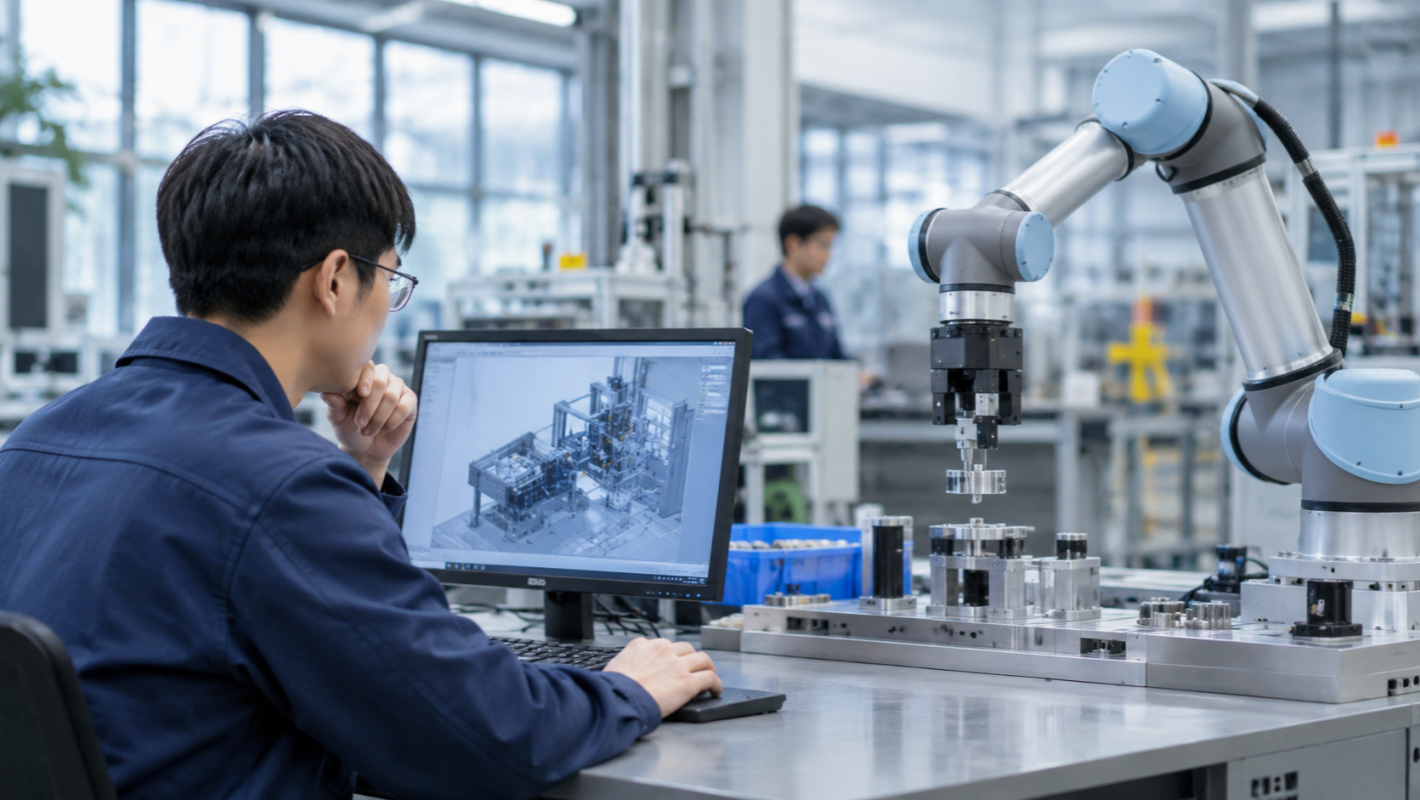
AI is moving from generating information to executing real-world tasks. In industrial engineering and robotics, intelligent systems are becoming part of design, operation, and production workflows, with human expertise and oversight remaining essential.
WIC Weekly Innovation Insights & Trends
November 27, 2026 | Friday
From “Answering” to “Acting”: AI Innovation Is Moving into Real-World Workflows
Compiled by: World Innovation Congress (WIC)
Looking at publicly disclosed industry developments in 2026, AI innovation is shifting from improving understanding and generation capabilities toward embedding intelligence in real-world production, engineering, and decision-making workflows.
In the past, businesses primarily used AI to answer questions, generate text, and assist with analysis. Today, a more practically significant question is emerging: Can AI understand business environments, use tools, complete specific tasks, and produce verifiable results under human supervision?
This shift is becoming increasingly evident in industry.
On November 24, Siemens announced the expansion of its Eigen Engineering Agent into the process industries, helping engineers work with control logic and engineering configurations. The agent has entered the product application stage. Based on preliminary estimates for selected engineering tasks, Siemens has reported potential time savings of approximately 20% to 60%. These figures are company-reported and require validation through additional independent cases. Engineers remain responsible for reviewing and approving the results.
If Siemens demonstrates how AI can “act” within engineering workflows, SenseTime’s exploration points toward “acting” in physical environments.
On November 25, SenseTime released its SenseNova-RoboRSI-27B robotics model. The model is currently at the stage of research release and real-robot testing. It attempts to select different control approaches according to the task and adjust its strategy based on execution feedback. According to experiments disclosed by the company, the model has completed tasks involving object grasping, placement, and block stacking on real robotic arms. These experimental results should not be equated with large-scale commercial deployment.
Together, the two cases illustrate AI’s emerging role in both engineering workflows and physical environments. They also point to a broader shift in innovation: AI is gradually moving from a standalone technical tool toward a collaborative system embedded in production workflows.
In the future, a company’s AI competitiveness will depend not only on model capabilities but also on its ability to integrate AI effectively with professional expertise, business data, workflows, and organizational mechanisms.
However, “the ability to act” does not mean “the ability to operate fully autonomously.” In high-risk settings such as industrial control, reliability, permission boundaries, process validation, and accountability remain essential prerequisites for application.
Based on currently disclosed product developments and research experiments, the next phase of AI innovation may warrant attention not only for improvements in model capabilities, but also for whether intelligence can be translated into productivity reliably and consistently in real-world environments.
文章来源:世界创新大会秘书处,版权属于原作者,转载请注明文章作者及来源。


点击右上角分享按钮